Published July 27, 2026 · Home Builder Pool Pros
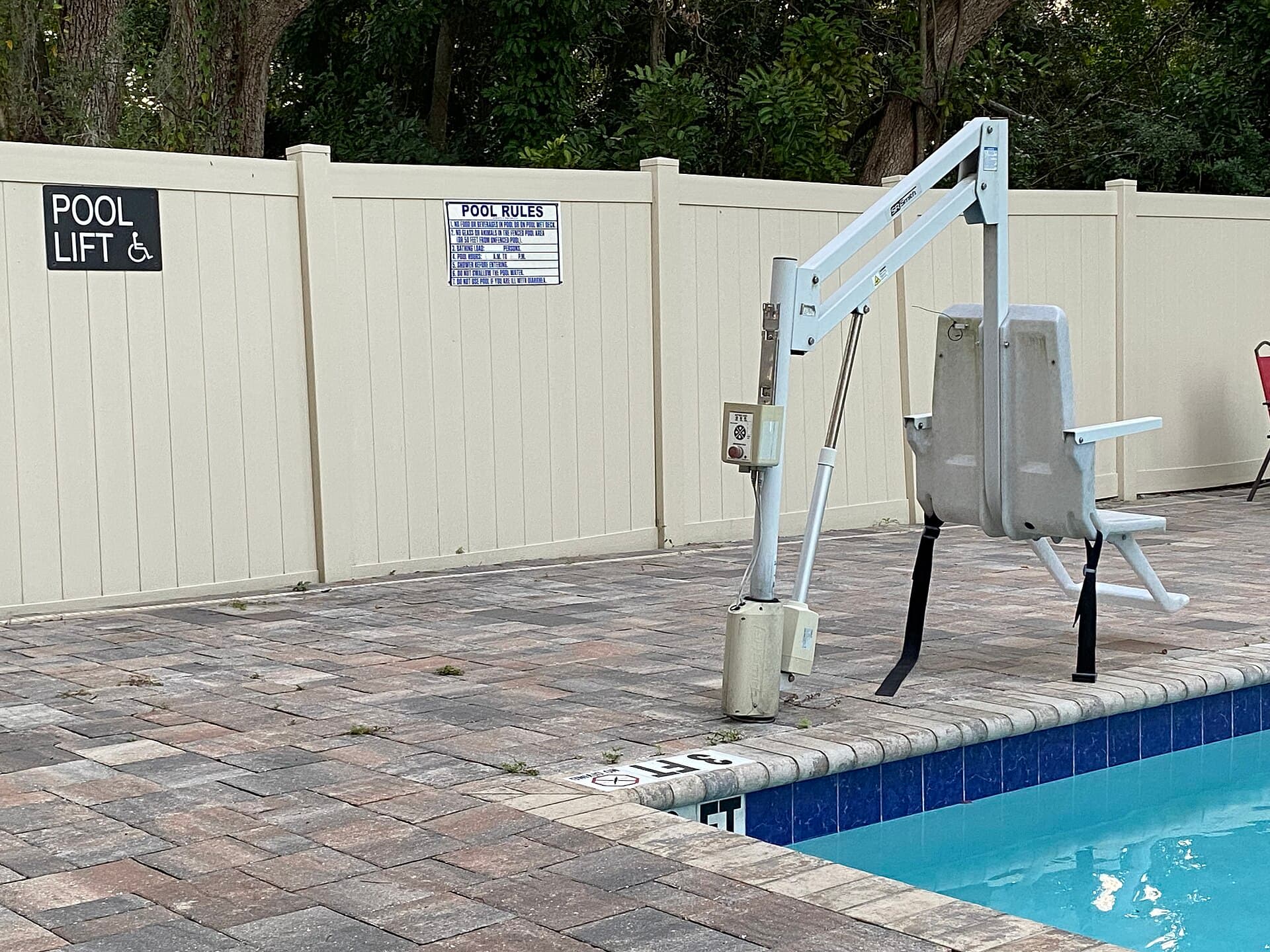
Somewhere between the lift-equipped hotel pool and the bare apartment pool next door, property managers get understandably confused about what the ADA actually requires. The answer has a clean general rule with sharp edges: a pool limited strictly to residents and their guests is not a place of public accommodation, so ADA accessibility requirements — including pool lifts — generally don't apply. But the moment the pool is made available to the public, coverage switches on. And separately, the Fair Housing Act applies to your community regardless. Here's how the lines actually run.
The general rule, from the DOJ itself
The Department of Justice's ADA guidance is unusually direct on this: Title III doesn't apply to strictly residential facilities, and community pools "limited to the exclusive use of residents and their guests are not covered" by ADA accessibility requirements. So the typical gated amenity pool, fob-access only, residents and guests — no lift required by the ADA.
The triggers that flip the answer
The DOJ's own illustrating example is an apartment complex: the pool serves tenants and guests, but the complex also sells pool memberships to the public — and that pool "qualifies as a place of public accommodation." Coverage triggers to watch:
- Selling pool memberships or day passes to non-residents
- Renting the pool or amenity area to outside groups or for public events
- Swim lessons or swim team programs that enroll the public
- Hotel or short-term-rental operation — hotels are public accommodations, full stop
- Note: the leasing office is a public accommodation even when the pool isn't — accessibility obligations there exist regardless
If the pool is covered, what's actually required
Under the 2010 ADA Standards, a pool with less than 300 linear feet of pool wall needs one accessible means of entry — a lift or a sloped entry. At 300 linear feet or more, it needs two, at least one being a lift or sloped entry. A spa needs one accessible means (lift, transfer wall, or transfer system). For existing pools at covered facilities, the obligation is barrier removal that's "readily achievable" — a fact-specific standard, not an automatic mandate to retrofit everything tomorrow.
The Fair Housing Act applies either way
Skipping the ADA doesn't mean skipping accessibility law. The Fair Housing Act covers apartment communities regardless, and it works through requests: a resident with a disability can request a reasonable accommodation (a policy change) or a reasonable modification (a physical change) needed for equal enjoyment of the community — including common areas like the pool. In conventional market-rate housing, structural modifications are generally at the resident's expense while policy accommodations are on the provider — but a flat refusal to engage with a request is itself a violation. And communities first occupied after March 1991 carry FHA design-and-construction duties for accessible routes to common areas, which touch the path to the pool, the gate hardware, and the deck even where no lift is required.
The practical audit
- Write down what the pool actually does — not what the lease says. Public events, sold passes, or open swim lessons anywhere in the last year change the analysis
- If units in the community operate as short-term rentals, talk to counsel — the residential line blurs quickly
- Handle every accessibility request through a documented interactive process rather than a quick no
- If you do install a lift, it becomes equipment: it needs maintenance, battery checks, and a place in the service scope
Summarizes DOJ ADA guidance and Fair Housing Act frameworks as of mid-2026. Coverage analysis is fact-specific — this is orientation for property teams, not legal advice.