Published July 31, 2026 · Home Builder Pool Pros
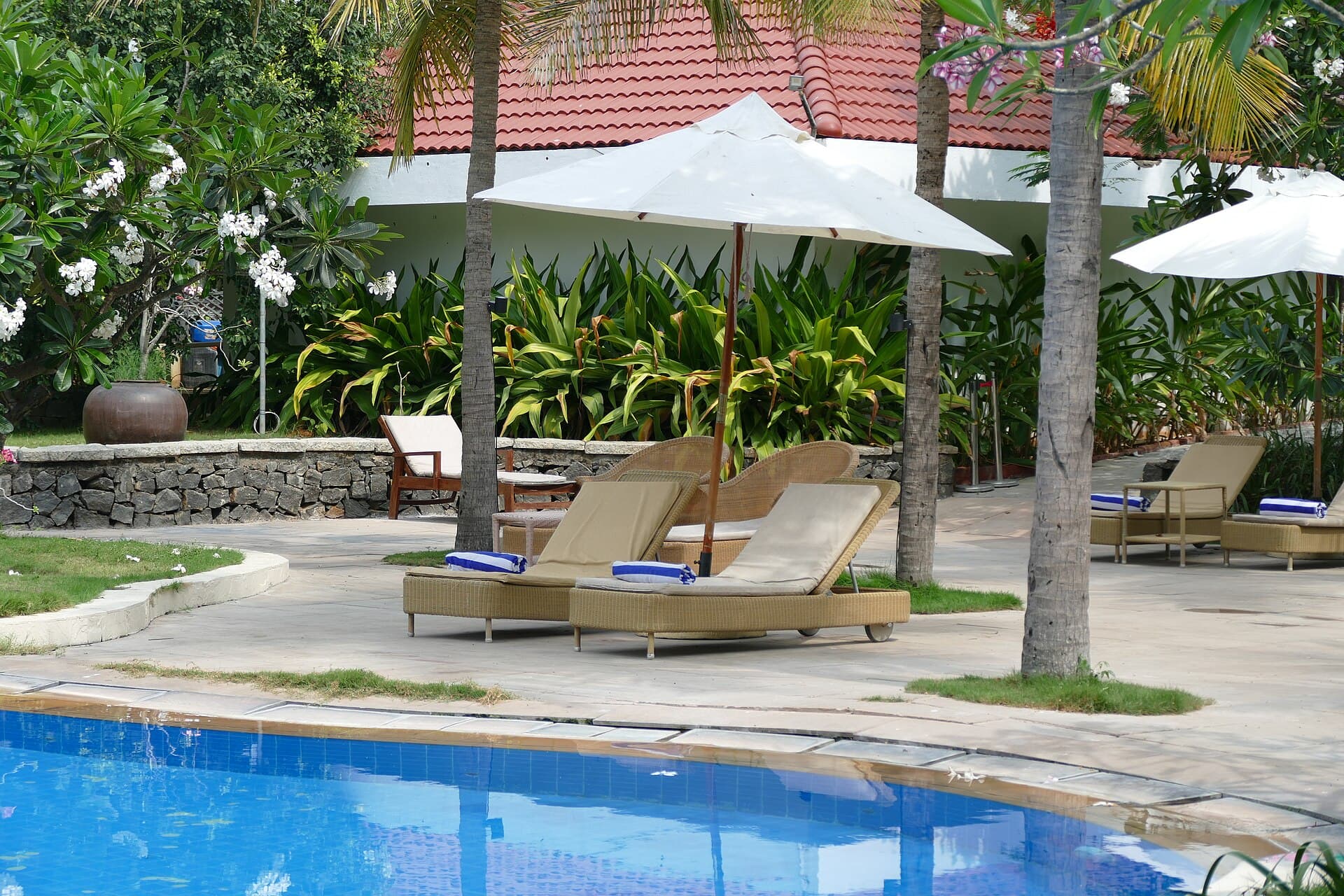
If you're closing on a new production home in Dallas–Fort Worth and expecting a private backyard pool to be part of the package, reset that expectation now. Across the major production builders that dominate DFW corridors — from Collin County growth markets to northwest Fort Worth master plans — a private in-ground pool is almost never a standard feature and almost never a routine design-center line item. You close on a finished house and a bare or lightly landscaped yard. The shared amenity pool at the clubhouse is the aquatic lifestyle the builder marketed; the backyard dig is a separate project with a separate contractor, separate permits, and a separate warranty stack. Plan for the real sequence: HOA architectural review, city building and barrier rules, North Texas clay soil engineering, and a first-year ownership routine that keeps Texas heat from turning a brand-new shell green.
Why production builders almost never include a private backyard pool
A gunite pool is not a finish upgrade. It's a separate engineered structure — shell, plumbing, electrical, deck, and barrier — with its own liability and warranty exposure. Production home warranties are built around the dwelling. Pool construction runs on a different trade schedule (often eight to sixteen weeks of active construction alone, longer once design and permits are included) and a different price band: mid-range custom gunite in DFW commonly lands roughly $70,000–$150,000+, according to contractor marketing ranges. That dwarfs typical design-center options and would blow production cycle times if builders tried to SKU it across hundreds of floor plans.
There's also lot and community variability that production systems hate. Setbacks, easements, utility locations, fence rules, and HOA architectural standards differ by village and city — not one option package that works on every lot. The practical substitute is the shared amenity pool: master-planned communities sell resort-style club facilities as the lifestyle feature while private backyard pools stay optional and post-sale. Confirm your specific purchase agreement and community docs; treat “not included / not a published option” as the baseline unless your contract says otherwise.
Amenity pool vs private backyard pool
In many Frisco, McKinney, Prosper, and Celina-style master plans, buyers swim at the amenity center in year one and only add a private pool later — once budget, HOA review, and how the family actually uses the yard are clearer. That dual world is the DFW default. Prestige west Plano HOAs sometimes have no community pool at all and lean on municipal aquatics, so don't assume every new subdivision hands you a resort deck at closing.
Keep the regulatory stacks straight: commercial Class C / multifamily amenity rules (Dallas Chapter 43A, Fort Worth TPO, and similar city programs) govern the HOA pool. Your backyard project is about architectural review, a residential building permit, and fence/barrier compliance — not commercial health-code operator credentials.
| HOA / amenity pool | Private backyard pool | |
|---|---|---|
| Who owns it | HOA or community association (or amenity management) | Homeowner |
| Who maintains it | HOA vendor / commercial pool service | Homeowner or residential service company |
| Rules that matter | Community pool hours, guests, and commercial/public-pool health codes where they apply | City building and barrier code plus HOA ARC for construction; residential care afterward |
| When you get it | Often available around closing as a community amenity | Almost always a separate project — concurrent custom or post-closing |
| DFW pattern | Common in Collin and northwest corridors (e.g. Frisco / McKinney MPCs with club pools) | Independent installers after you own the lot — not a production-builder SKU |
Concurrent build vs post-closing: the real tradeoffs
Most production-home buyers in DFW end up post-closing by default — the builder doesn't include the pool, and concurrent work only happens when a buyer arranges a pool contractor early and the home builder cooperates. Concurrent installs are more common on custom homes. Treat the dollar bands below as industry and contractor guidance from DFW pool-builder content (notably DFW Custom Pools' 2026 new-construction timing guide and related local contractor FAQs), not as quotes or guarantees for your lot.
- Concurrent pros (contractor guidance): potential total advantage often framed around $15,000–$40,000 via financing, utility stub-outs during rough-in, and avoided retrofit; utility integration savings commonly cited around $4,500–$15,000; job-site access is already open; integrated timelines sometimes cited around five to six months alongside the home
- Concurrent financing framing (illustrative only — ask your lender): some buyers can roll pool cost into the construction mortgage; standalone pool loans usually cost more per month than a mortgage roll-in of the same principal
- Concurrent risks: coordination between home builder and pool builder; design locked before you've lived with the yard's sun, drainage, and traffic patterns; not all production builders allow or facilitate concurrent private pools
- Post-closing pros: live with the yard through seasons before you dig; off-season (roughly September–February) construction sometimes cited at 10–20% savings with faster permits (~2 weeks vs 5–6 weeks in peak); full projects often land around three to five months off-peak, with active construction commonly eight to twelve weeks (Mid City and Leisure Living ranges in the same ballpark: full process often four to six months, construction ten to sixteen weeks)
- Post-closing cons: retrofit and disruption costs commonly cited at $5,000–$25,000 (landscape restore, irrigation, utilities in the dig path, access, fence remove/reinstall); peak season (March–August) can mean three-to-four-month builder backlogs before start
North Texas clay soil — plan for it before you dig
Large parts of DFW sit on expansive clay that swells when wet and shrinks when dry. That movement stresses rigid pool shells, decks, and plumbing. Local contractor guides discuss an active soil zone often on the order of ten-plus feet deep and warn that pools built without proper soil engineering are prone to structural cracking within roughly two to three years. Repair bands for cracked shells or major deck shift are commonly cited in the $10,000–$30,000+ range — present that as an industry warning, not a prediction for your lot.
Gunite or shotcrete is the dominant custom answer in North Texas because rebar, shell, and pier details can be engineered to the soil. Fiberglass is less common as a full custom clay solution among local installers. Ask your pool builder about a geotechnical report (commonly cited around $500–$1,500), a structural engineer stamp, piers below the active zone, and drainage/backfill details — pier packages are sometimes marketed as adding $5,000–$30,000+. Home Builder Pool Pros maintains pools; we do not design shells. Insist on soil and engineering diligence with the installer before you break ground.
HOA ARC, permits, and fence barriers
Virtually every DFW city requires building permits — and typically electrical and plumbing — for a new residential pool. The pool builder usually files them; timelines of two to six weeks are common, longer in peak season. In master-planned communities, Architectural Review Committee approval often comes first: site plan, elevations, materials, and landscape, commonly another two to four weeks depending on meeting cadence. Compact production lots shrink the buildable envelope further — utility easements, side-yard setbacks, and drainage swales matter, and a fenced backyard at closing does not guarantee pool feasibility.
Budget the barrier into the project, not as an afterthought. Texas Health & Safety Code Chapter 757 sets the pool-yard enclosure baseline, and cities layer local amendments (ISPSC adoptions and local height/gate rules). Themes you'll see repeatedly: barriers for water features above a depth threshold, minimum fence heights around four feet / 48 inches on the exterior side in many jurisdictions, and self-closing, self-latching gates. Cities often inspect barriers before final approval or fill. Keep gates working after landscaping settles — disabled latches are how new pools fail inspections and HOA walkthroughs.
First-year service checklist for new pool owners
Once the installer hands over the pool, ownership shifts from construction to chemistry and equipment literacy. DFW heat turns neglect into green water fast — industry content often cites blooms accelerating within about 48 hours in Texas heat. Lock a service cadence before peak summer, whether that's weekly professional service or a disciplined DIY schedule for year one.
- Get the paperwork straight — installer contract, structural vs equipment warranty, equipment model/serial list, automation login, water chemistry start-up sheet, and as-built or drain locations if provided
- Know who to call for what — installer for shell, deck, structural warranty, and punch list; independent service for weekly chemistry, filter, salt cell, heater, and freeze prep (unless you stay on the installer's maintenance arm)
- Note clean-filter PSI at handover so you know when pressure climb means a backwash or cartridge clean
- If you have a salt system, test salt and inspect the cell on a schedule — North Texas hardness (often roughly 190–340 ppm depending on city; Collin County is especially hard) scales cells and heaters
- Watch calcium and scale on tile, salt cells, and heaters in hot weather; plan periodic cleaning as the installer and water conditions require
- Have a freeze plan for the first winter — circulate, protect vulnerable equipment, or follow a professional hard-freeze protocol (Uri-era damage stories in DFW are not abstract)
- Maintain HOA-visible clarity and working self-closing/self-latching gates; don't disable alarms
- Budget operating cost as a planning range — contractor content commonly cites roughly $3,000–$6,500 per year and $15,000–$32,500 over the first five years for chemicals, service, power, and repairs; align that with your own quotes before you treat it as a forecast
- Follow plaster/surface start-up brushing and chemistry instructions — aggressive early mistakes burn goodwill and can weaken your warranty posture
When the dig is done, schedule the service
Home Builder Pool Pros is a pool service company — we maintain residential pools after the installer leaves, not a construction or design-center partner for production builders. If you've closed on a new DFW home and you're planning a private pool, or you've just taken handover on a custom install, the highest-leverage move for year one is a reliable chemistry and equipment cadence before July heat arrives.
Schedule residential pool cleaning and ongoing service so the first summer is blue water and working equipment — not a green-pool recovery invoice and a warranty argument about who brushed the plaster.
Home Builder Pool Pros is an independent pool service company and is not affiliated with, endorsed by, or sponsored by any home builder, pool installer, lender, or homeowners association named or described in this guide. Builder, community, and product names are trademarks of their respective owners and are used only to describe homes and pools commonly found in the Dallas–Fort Worth area. Cost, timeline, financing, and soil figures are industry and contractor guidance ranges — not quotes, engineering advice, or mortgage or tax advice. Always confirm warranties, design-center options, HOA architectural rules, city permits, barrier requirements, soil conditions, and financing with your builder, pool contractor, association, city, geotechnical/structural professionals, and lender before you dig or borrow.