Published July 27, 2026 · Home Builder Pool Pros
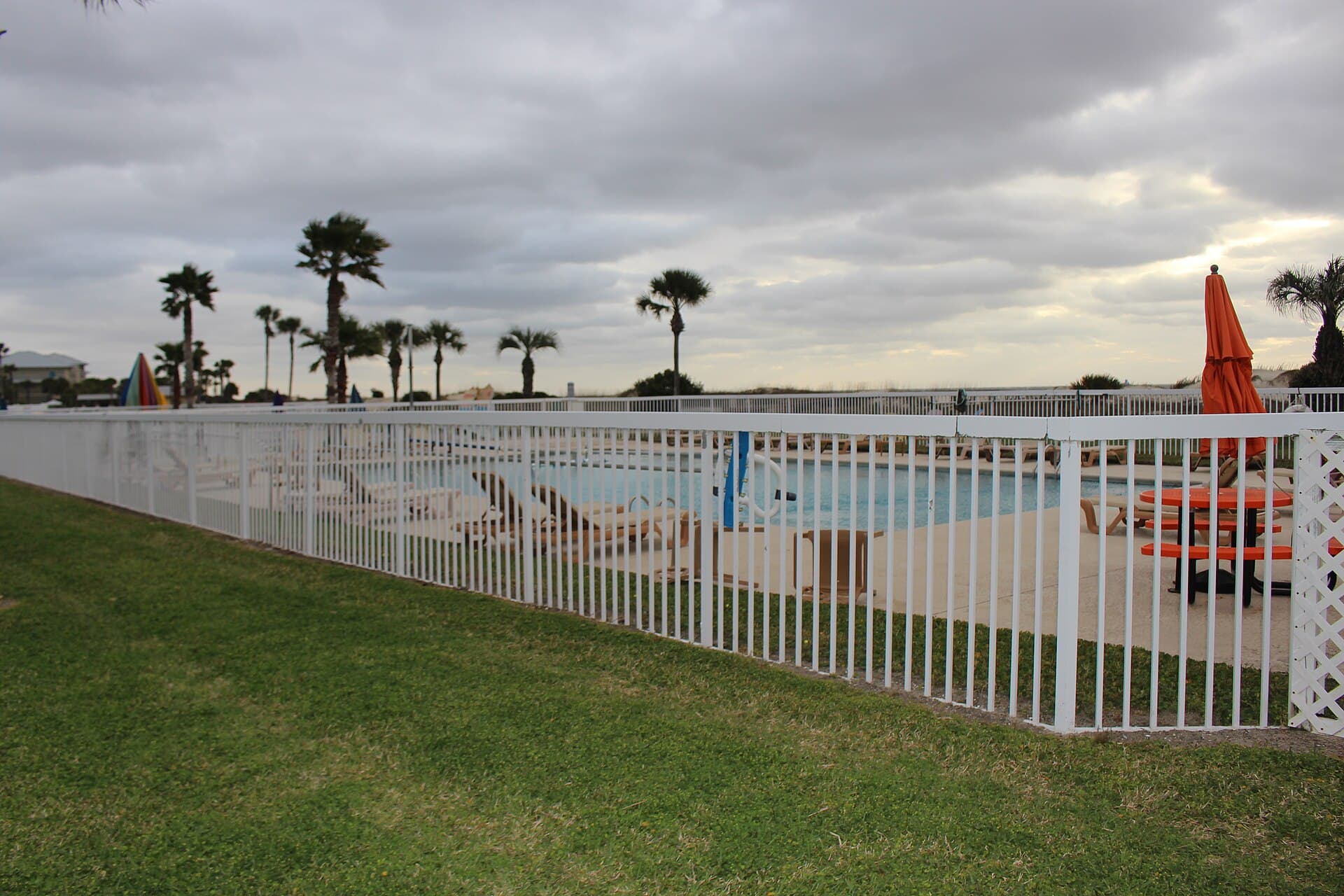
Texas has a fence law written specifically for apartment and HOA pools: Health & Safety Code Chapter 757, on the books since 1994. It applies to pools owned or controlled by the owner of a "multiunit rental complex" or a property owners association — your pool, by name. The statute instructs courts to construe it liberally "to prevent pool deaths and injuries," its duties cannot be waived in a lease, and it hands tenants a private right to sue. Of everything in Texas pool law, this is the chapter that shows up in wrongful-death filings. Here's what it actually requires.
The enclosure spec
- The pool yard must be completely enclosed, at least 48 inches high measured from the ground on the outside
- Gaps under the fence can't pass a 4-inch sphere
- If the fence has horizontal rails less than 45 inches apart (a climbable ladder), openings tighten to a 1¾-inch sphere; rails 45+ inches apart get the 4-inch standard
- Chain link is banned outright for enclosures built after January 1, 1994 (existing pre-1994 chain link is grandfathered with a 2¼-inch opening limit)
- Decorative cutouts can't exceed 1¾ inches in any direction, solid walls can't have footholds, and nothing climbable can be placed against the fence
The gate spec
- Self-closing AND self-latching — the statute defines this as closing and latching automatically, without human or electrical power
- Opens outward, away from the pool yard
- Latch at least 60 inches above the ground — with two exceptions: a pool-side latch at least 3 inches below the top of the gate with no opening bigger than ½ inch within 18 inches of it, or a 42-inch latch if the gate requires a key, card, or combination on both sides
- Lockable, and locked whenever the pool is closed
- Never propped open — the state rule prohibits it unless a contractor is present doing work that requires it
The 31-day rule almost nobody follows
Section 757.009 requires the owner or association to inspect pool-yard enclosures, gates, and self-closing/self-latching hardware no less than once every 31 days — and subsection (d) says this duty may not be waived under any circumstances. That means a documented monthly gate-inspection log isn't best practice; it's a statutory duty. In litigation after a drowning, this log is the single most important document the property has — or doesn't have. A missing log hands the plaintiff a ready-made negligence argument; a complete one is the owner's best defense.
Some cities go further: Fort Worth's pool ordinance requires logged weekly enclosure and gate inspections. Our commercial routes check and log gates on every visit, which satisfies both standards without the property team lifting a finger.
What failure costs
Chapter 757 gives tenants, association members, and "any other person" the right to sue for a compliance order, actual damages, punitive damages for gross negligence, a civil penalty up to $5,000 plus attorney fees — and, notably, punitive exposure where an owner was technically compliant but "consciously indifferent to access being repeatedly gained to the pool yard by unauthorized persons." Translation: knowing the neighborhood kids hop the fence and doing nothing is itself actionable.
The real-world stakes are bigger than the statutory penalty. In 2023, a Harris County case settled for a reported $18 million after a four-year-old drowned at a Baytown apartment pool — he got through a gate that wasn't properly latched because a chain had been placed over it. Plaintiff's counsel called it the largest settlement for a single child drowning in U.S. history, and their statement is worth taping to the maintenance-shop wall: the codes assume an unsupervised child is trying to get in. National inspection data backs the focus — enclosure violations are one of the most frequently cited drowning-risk categories in pool inspections.
The monthly walk, in five minutes
- Open every gate and let it go — it must close and latch by itself, every time, from any position including barely-open
- Check latch height and the ½-inch clearance rule if your latch sits low on the pool side
- Walk the fence line for gaps under the fence, loose pickets, and anything stored against the outside that a child could climb
- Confirm the gate lock works and the pool actually gets locked at close
- Write it down — date, inspector, findings, fixes. The log is the point
Summarizes Texas Health & Safety Code Chapter 757 and related state rules as of mid-2026, with grandfathering provisions for pre-1994 construction simplified. Not legal advice — for enclosure retrofit questions, involve your city's code office.