Published July 31, 2026 · Home Builder Pool Pros
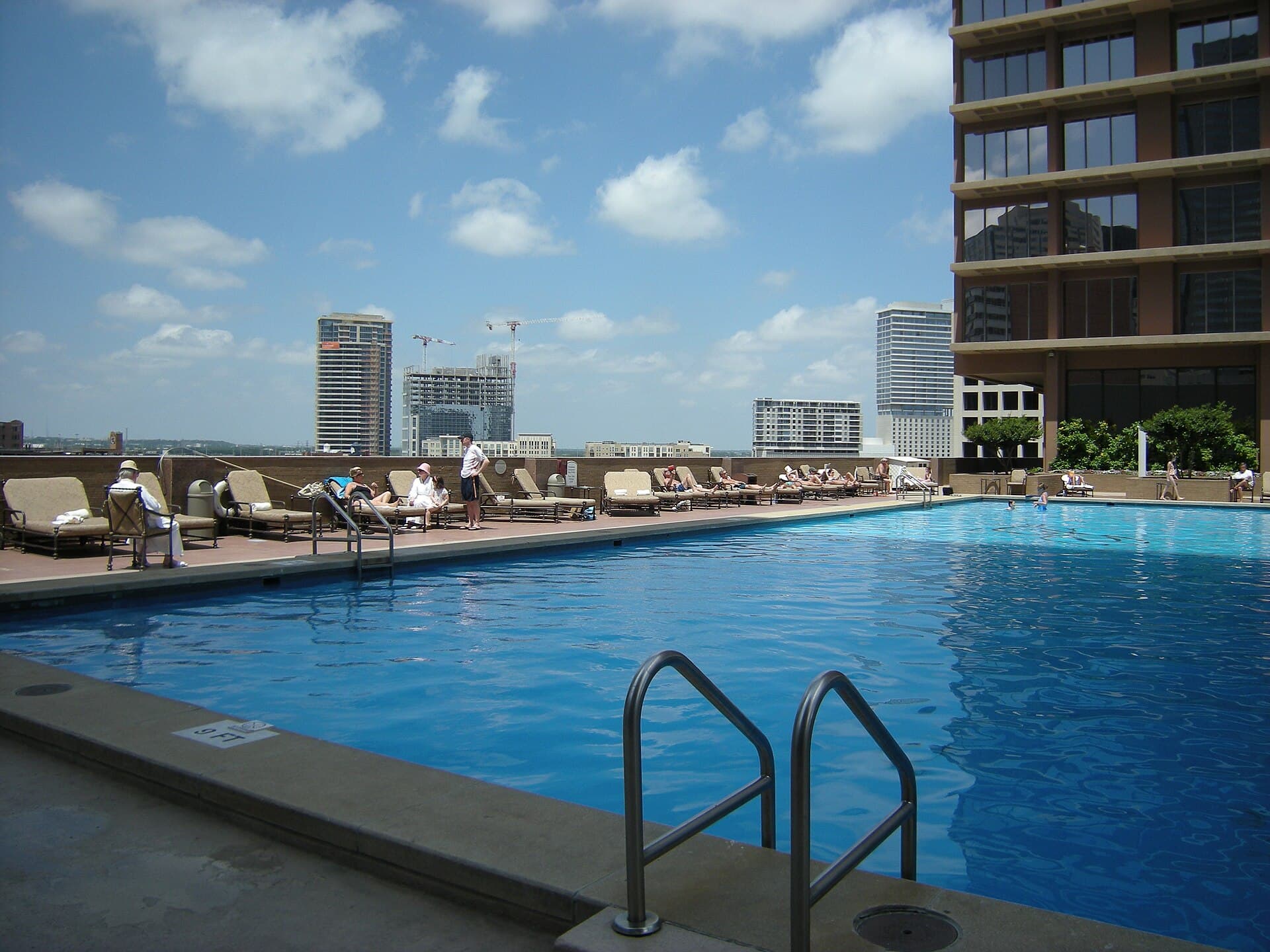
Dallas–Fort Worth commercial amenity pools are not one product. Under 25 TAC Chapter 265 Subchapter L, Class C covers pools and spas limited to occupants, members, or students and their guests — operated with lodging (hotels, motels, apartments, condominiums, RV parks, mobile home parks), property owner associations and clubs, or schools, colleges, and universities in academic use. Apartment deep-dives already exist elsewhere on this site. This hub maps the non-apartment Class C world — lodging, membership, campus, boards, and year-round ops — and shows which rulebook, which city credential, and which sibling guide applies before you open for the season.
Class C map — who sits under the lodging and membership umbrella
Texas Class C is explicit about facility types. Hotels and motels share the lodging lane with apartments and condos, and the same Class C lodging definition also names RV parks and mobile home parks. Property owner associations, private organizations, and clubs sit in a membership lane. Schools, colleges, and universities qualify while the pool is operated for academic or continuing-education classes. Class A is for accredited competitive events; Class B is open to the general public with or without a fee (municipal pools, waterparks).
One hub does not mean one buyer story. A hotel general manager cares about guest reviews and overnight uptime. An HOA board cares about Chapter 757 inspections, reserves, and opening day. A school facilities director cares about youth-group lifeguard triggers and academic/Class A event flips. Use the child guides below for the vertical; use this page for the shared posture.
| Lane | Typical Class C examples | Start here |
|---|---|---|
| Lodging | Hotels, motels, extended-stay, RV / mobile home parks | Hotel & motel pool service |
| STR / host | Short-term rentals when treated as lodging (confirm with city) | Airbnb / STR pool rules |
| Membership / boards | HOA & condo amenity pools, fitness clubs | HOA / condo pool management |
| Campus | School, college, university pools in academic use | School & university compliance |
| Ops themes | Indoor pools, commercial spas, year-round vs seasonal | Indoor maintenance & spa guides |
The Class B tripwire
A pool normally operated as Class C that is made available to the general public — with or without a fee — must meet Class B operational standards for that use, including lifeguards when open as Class B. Day passes, ResortPass-style cabana sales to non-guests, ticketed public swim events, and similar public access are the classic tripwires for lodging and clubs.
Other lifeguard triggers that can hit Class C without a full public conversion include above-deck entry features open for use, youth-group recreation, and wave or surf pools. When in doubt, treat public access as a classification change for that use — not a marketing footnote.
- Selling day access or hosting public swim events → Class B ops / lifeguards for that use
- Above-deck entry features open for use can trigger lifeguard rules even on Class C venues
- Youth-group recreation has its own lifeguard trigger under state operational standards
- Apartment lifeguard guide on this site covers Class C defaults and tripwires in more depth
Enclosure split — Chapter 757 vs Class C lodging enclosure
The #1 content error across commercial amenity pages is copying apartment fence rules onto hotels. Texas Health & Safety Code Chapter 757 applies to multiunit rental complexes and property owners associations — not to hotels or typical overnight lodging. Hotels, motels, and other Class C lodging outside Chapter 757 use the 25 TAC Class C enclosure standards instead.
HOA and condo amenity pools are the opposite case: they are Class C and Chapter 757 usually does apply, including the non-waivable inspection duty. STR backyard pools are case-by-case — 757 only if the pool is at a multiunit rental complex or controlled by a POA; otherwise residential barrier rules and/or Class C lodging enclosure may apply depending on how the city classifies the use. Confirm with the local pool authority before you invent a fence story.
| Facility | Enclosure path | Do not assume |
|---|---|---|
| Hotel / motel / typical lodging | 25 TAC Class C enclosure | Chapter 757 apartment fence language |
| Apartment / multiunit rental | Chapter 757 | Hotel-only enclosure shortcuts |
| HOA / condo (POA-controlled) | Chapter 757 | That lodging exclusion somehow applies |
| STR / Airbnb backyard | Confirm with city — 757 only if multiunit/POA; else residential and/or Class C lodging | A statewide “Airbnb fence” statute |
DFW city layer — permits, MPO, and reopen fees
State class and enclosure rules are only half the operational stack. Dallas requires a city-issued Manager of Pool Operations (MPO) credential — separate from industry CPO — and commercial permits commonly expire at the end of February. Fort Worth runs a one-day operator course that covers apartment, hotel, and health-club pools; the credential is typically valid three years and posted next to the permit, and the city has charged a $200 reopening fee after a city closure. Spas are separately regulated and often separately permitted and fee’d.
Exact fee tables and deadlines change — treat the commercial permit calendar guide as the living index, not this hub paragraph.
- Dallas — MPO + February permit cycle for commercial pools
- Fort Worth — hotel / apartment / health-club operator course; reopen fee after closure
- Spa = separate body for signs, chemistry, and often city fees
- Indoor / year-round pools are often inspected year-round, not only in spring outdoor sweeps
Guide tree — children and shared apartment compliance
Reuse apartment guides for shared sign inventory, fecal response, VGB drain covers, and lifeguard tripwires. Specialize buyers and enclosure path in the facility children. Start with city deadlines, then pick the vertical that matches who pays the invoice.
- Lodging: hotel/motel service, extended-stay quirks, hotel inspection checklist, RV / mobile home park pools
- STR / host: Airbnb & short-term rental pool rules; short-term rental safety checklist
- Membership / campus: HOA/condo management, fitness clubs, school/university compliance
- Ops themes: indoor maintenance, commercial spa compliance, year-round vs seasonal, casino/resort framing (honest border geography)
- Shared apartment cluster: permit calendar, opening-day playbook, budgeting, signs, fence/gates (when 757 applies), fecal response, vendor selection, VGB, ADA contrast for lodging Title III
Commercial service for Class C amenity pools
Home Builder Pool Pros provides commercial amenity pool service across Dallas–Fort Worth. We are not a city health department, zoning office, or HOA management company. If you operate a hotel, club, school, HOA, or other Class C amenity pool and need a route that respects city credentials, spa-as-second-body, and guest or member uptime, schedule a visit so we can see the bodies and logs in person.
This page is general information for Dallas–Fort Worth commercial and lodging amenity pools, not legal advice, zoning advice, or a substitute for city health department rules, DSHS text, HOA counsel, campus EH&S, or insurance underwriting. Class definitions, enclosure duties, operator credentials, fees, and STR ordinances change. Confirm current 25 TAC Chapter 265 Subchapter L, Health & Safety Code Chapter 757, and local programs before you open, list, or advertise public access.
Related
- Commercial pool service
- Schedule pool service
- DFW commercial pool permit calendar
- Hotel & motel pool service in DFW
- Airbnb & short-term rental pool rules in Texas
- Indoor pool maintenance in DFW
- HOA & condo pool management in DFW
- Extended-stay & all-suite hotel pools
- Hotel pool inspection checklist
- Fitness club pool service in DFW
- School & university pool compliance
- RV & mobile home park pools
- Casino & resort pool amenities near DFW
- Short-term rental pool safety checklist
- Commercial spa & hot tub compliance
- Year-round vs seasonal amenity pools
- Amenity pool opening-day playbook
- Budgeting pool maintenance (multifamily)
- Texas apartment pool sign requirements
- Texas apartment pool fence & gate rules
- Apartment pool fecal incident response
- Do apartment pools in Texas need a lifeguard?
- What to expect from a commercial pool vendor